Understand
fluidic physiology
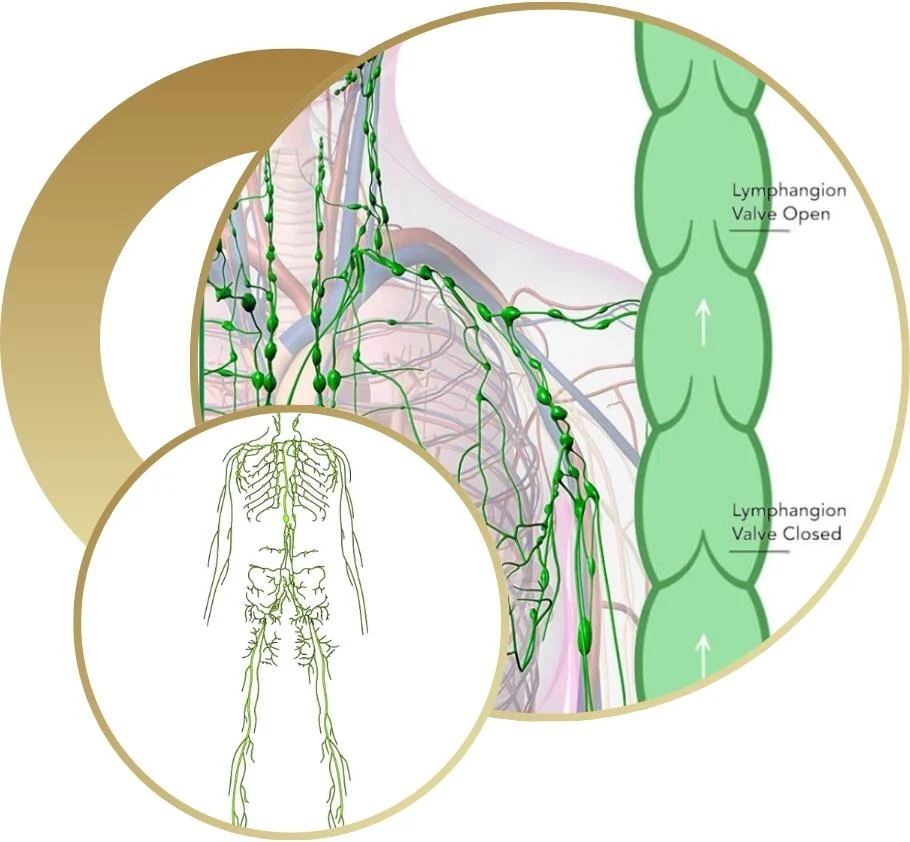
Lymphology is the medical science and study of the lymphatic system, encompassing its anatomy, physiology + pathology.
The lymphatic system maintains the internal fluid environment of the ENTIRE body and is the primary regulator of tissue hydration, immune surveillance, nutrient distribution + metabolic waste clearance.
Its fundamental function is essential to tissue health, organ function, cognition + physiologic recovery.
“Investigating the integrity of lymphatic anatomy and physiology during patient evaluation is not alternative or complementary medicine—it is medicine and a fundamental component of comprehensive clinical assessment.”
Rebecca Mailloux
FOUNDER | LymphLAB®
Fluid Dynamics
fluid dynamics
fluid health
“MMLD® manually stimulates WHOLE systems fluid transport + restores fluid dynamics by facilitating lymphatic and glymphatic circulation through rhythmic fluctuations in tissue.”
Rebecca Mailloux
FOUNDER | LymphLAB®
fluid transport
Fluid transport reflects the body’s physiologic reserve. The interstitium is indispensable, yet its function cannot be fully understood apart from the continuous vascular–interstitial–lymphatic continuum.
Daily, approximately 2–4 liters of interstitial fluid, along with proteins, immune cells, lipids and countless signaling molecules, transition through this fluid environment before returning to the bloodstream.
As transport capacity progressively declines, the body compensates to preserve function, often masking subtle physiologic dysfunction long before structural pathology becomes clinically apparent.
fluid stimulation
Unlike the two-way cardiovascular system, the lymphatic system does not have a central pump. Lymph transport depends upon intrinsic lymphatic vessel contractions, skeletal muscle activity, respiration and fascial movement to propel fluid through the body. The lymphatic + glymphatic systems are dynamic transport networks built for movement.
When physiologic movement or fluid dynamics become compromised, lymphatic transport capacity becomes inefficient, resulting in tissue congestion and impaired physiologic function. Physiologic reserve and adaptive resilience progressively erode the body’s ability to adapt, accelerating inflammaging and compromising long-term health.
“Lymphology has yet to realize its full potential. The future of diagnostic medicine lies in incorporating WHOLE human fluid physiology—where vascular, interstitial + lymphatic functions are understood as one continuous physiologic continuum.”
Rebecca Mailloux
FOUNDER | LymphLAB®
Tissue Dynamics
Radiation and burn injury recovery require the rehydration of damaged tissue.
MMLD® rehydrates damaged and dehydrated tissue, restoring nerve function and mobility.
Regardless of the body site location or cause, scar tissue creates a disruption in tissue hydration and function.
MMLD® rehydrates scar tissue and damaged fascia, reducing pain + improving mobility.
Oversaturated tissue suffocates nerve and muscle function, creating a stagnant environment and breeding ground for infection.
MMLD® drains inefficient and stagnant tissue, reducing pain + improving circulation.
Soft tissue damage can result in deformity, pain, swelling, and loss of nerve function.
MMLD® flushes damaged tissue, removing cellular debris + facilitating healing.